Table of contents
- Define Your Preferred Wedding Photography Styles First
- Editorial or Fine Art
- Photojournalistic or Documentary
- Traditional or Classic
- Look Beyond the Instagram "Highlight Reel"
- Consistency in tricky lighting
- The quiet, in-between moments
- How they handle group photos
- The "Vibe Check": Why Personality is Your Secret Weapon
- Let's talk about something that never shows up in the official checklist but matters more than almost anything else.
- Budget vs. Value: Understanding the Investment
- Conclusion: Trust the Process (and Your Gut)
- Frequently Asked Questions
- How far in advance should we book our wedding photographer?
- What happens if our photographer gets sick on the wedding day?
- Do we really need a second shooter?
- How long does it typically take to get our wedding photos back?
- Should we provide a specific shot list for the day?
Let me be honest with you for a second. Wedding planning is a lot. Between the venue deposits, the seating chart politics, and the never-ending opinions from well-meaning relatives, it can feel like you're constantly making big decisions while running on empty. And then someone asks, "Have you booked your photographer yet?" and suddenly everything feels a little heavier.
I remind couples that while most wedding details are temporary, the cake is eaten, flowers wilt, your photographs endure. They are the lasting memories your family will cherish for generations, long after the day itself has passed.
That's not pressure. It's just the truth. And it means that learning how to choose the right wedding photographer is not something you want to rush.
I've spent years working inside the wedding industry, and I've seen what happens when couples make this decision too quickly, based on price alone or a pretty Instagram page. I've also seen the magic that happens when the fit is truly right. So pull up a chair. Let's walk through this together.
Define Your Preferred Wedding Photography Styles First
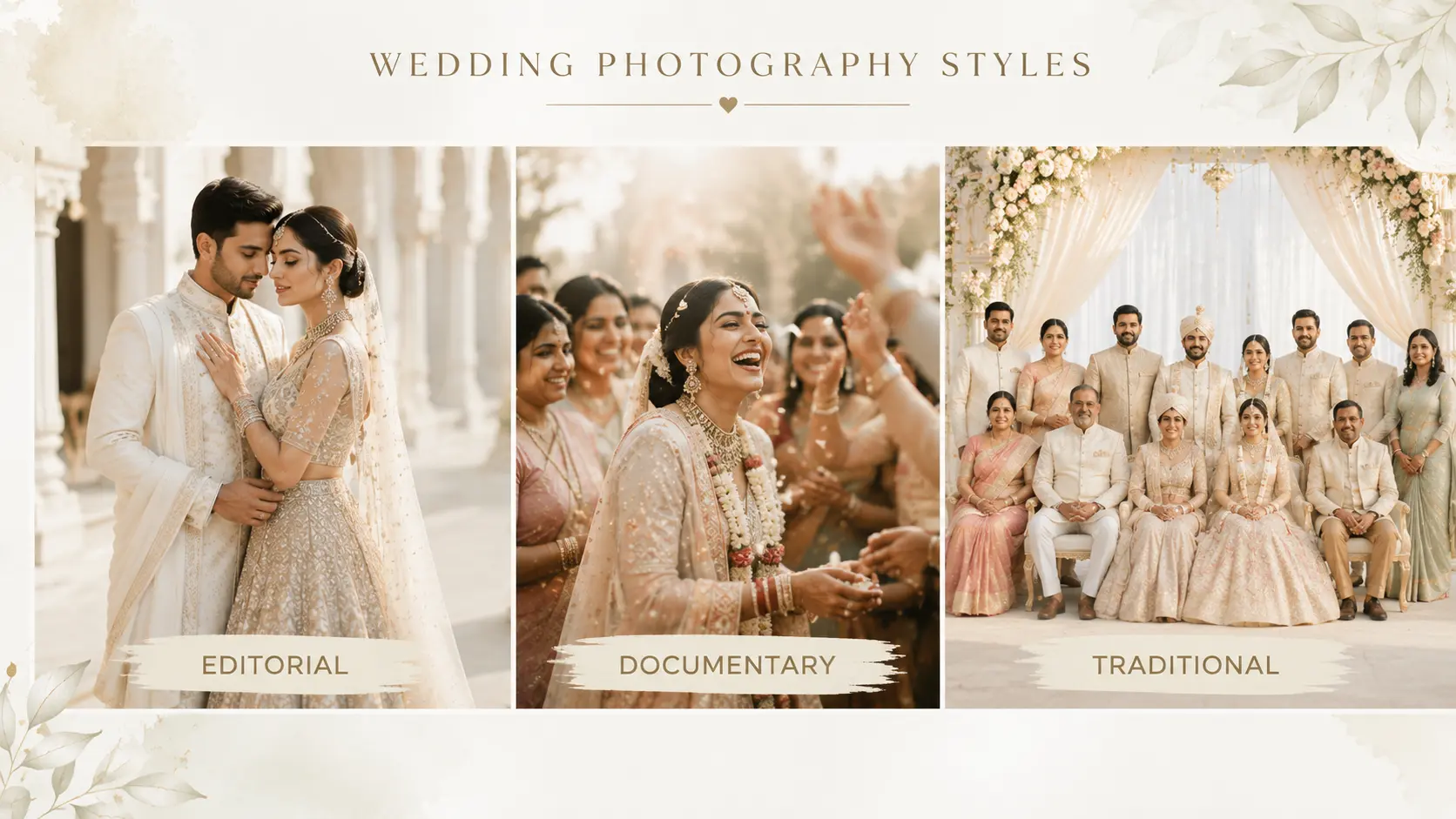
Before you even open a browser tab, you need to get clear on one thing: what do you actually want your photos to feel like?
This sounds simple, but most couples skip it and end up comparing very different things when they start browsing. Wedding photography styles vary a lot, not just in how they look, but in how your whole day is approached and captured.
Editorial or Fine Art
Photography looks like it belongs in a fashion magazine. Think dramatic lighting, careful framing, and couples posed in a way that looks natural but is actually very planned. If you look at a photo and think, this could be a perfume ad, that's editorial. It's stunning, but it works best with a photographer who gives clear direction and a couple who is comfortable being guided.
Photojournalistic or Documentary
Photography is the opposite. The photographer blends into the background and moves through your day like a quiet observer, catching the moment your grandmother wipes her eyes during the vows, your best man losing it during the speech, or the flower girl abandoning her petals to chase the family dog. These images feel real and full of emotion, but they rely on a photographer who knows where to be before a moment happens.
Traditional or Classic
Photography is what most people picture when they think of a wedding album: clean, timeless, well-lit portraits of the family, the wedding party, and the couple. It's structured and it serves a very real purpose. Thirty years from now, you'll be glad someone made sure Grandpa Ted got a proper portrait.
Most photographers mix all three styles, but every photographer leans toward one more than the others. Know which one feels right to you before you start making calls. Save 10 photos that you love and look for what they have in common.
Look Beyond the Instagram "Highlight Reel"
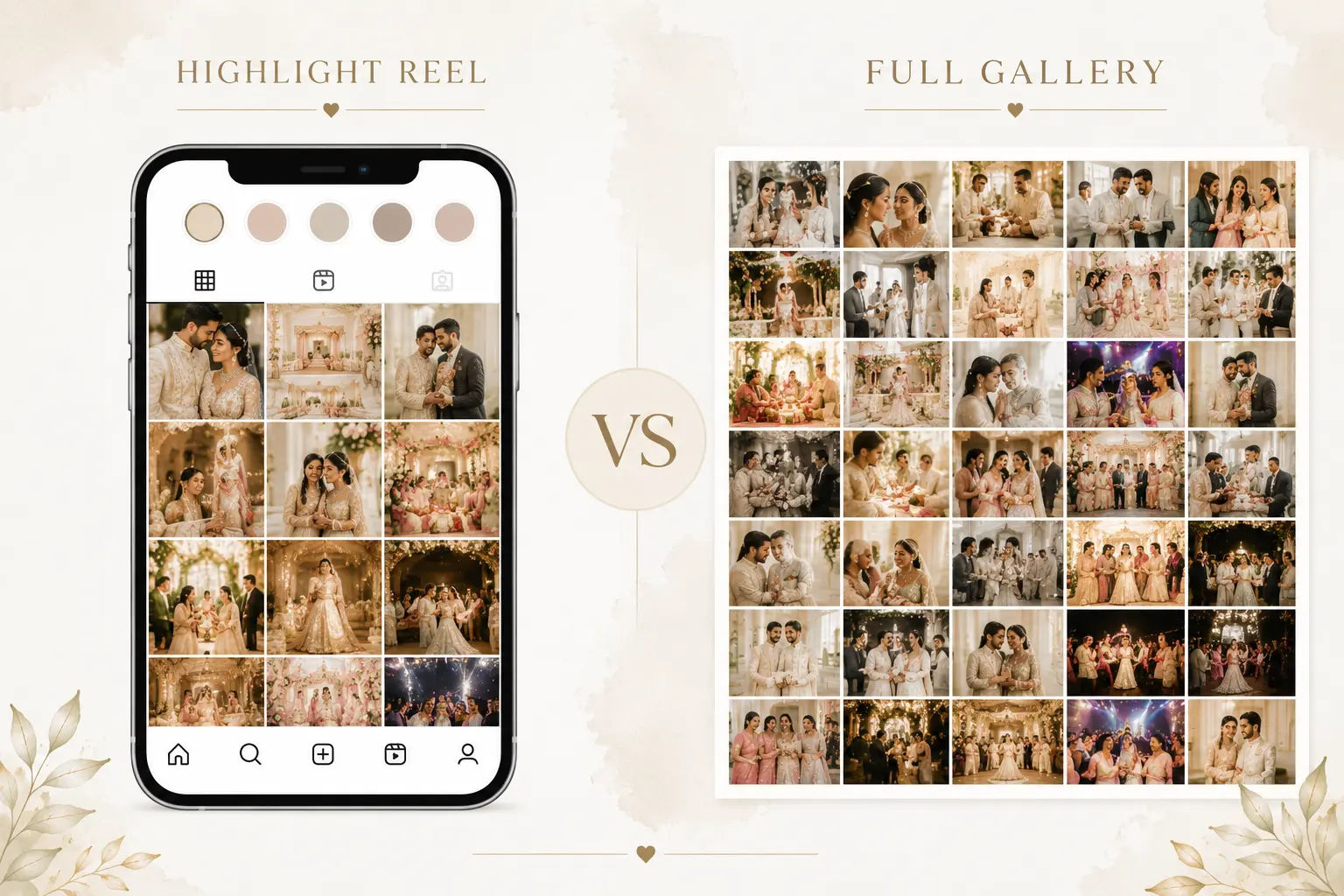
Here's a tip most couples don't think to use: ask to see full, delivered wedding galleries, not just a curated portfolio or a styled shoot, and definitely not a highlight reel of their top 30 best shots.
Photographers naturally show their best work first, and that makes sense. But Instagram only shows the best light, the best moments, the best couple, the best venue. What you need to see is how a photographer performs on a normal, imperfect day.
When you're looking through a full gallery, ask for two or three from different seasons or venues. Here's what to pay attention to:
Consistency in tricky lighting
Can they get a good shot in harsh midday sun? What do the reception photos look like in a dark ballroom with coloured lights? Churches with stained glass windows are notoriously hard to shoot in. Look for those.
The quiet, in-between moments
A great gallery is not just 40 stunning shots. It also has grandma being seated, the groom sharing a laugh with his father, and the bridesmaids packed into the bridal suite while someone's curling iron has gone missing. Those everyday moments should feel just as alive.
How they handle group photos
Family formals are not glamorous, but they matter to real families. Check how organised the photos look, whether people appear natural, and whether eyes are open.
A photographer who shows you only their best twelve images is doing what anyone would do. But a photographer who shows you a full gallery of 600 images and you cannot find a single bad one? That's someone you can trust on your wedding day.
The "Vibe Check": Why Personality is Your Secret Weapon
Let's talk about something that never shows up in the official checklist but matters more than almost anything else.
Your wedding photographer will spend somewhere between 8 and 12 hours with you on one of the most emotional days of your life. They will be there when you're getting your hair done and cannot zip your dress. They'll be next to you when you cry during the vows. They'll be nearby when you and your new spouse have a quiet, tense moment about something small that feels very big in that moment. They'll be fixing your flower before you walk into the reception and cracking a small joke to help you relax.
That is not just a business arrangement. It is closer to spending the whole day with a trusted friend.
I often tell couples that you can learn better posing or a different editing style, but you cannot teach someone to read a room. You cannot teach warmth. You cannot teach the kind of calm that makes a nervous groom's shoulders drop the moment the photographer walks in.
So yes, look at their portfolio carefully. But also get on a video call or meet for coffee. How do you feel after 45 minutes with this person? Do they make you laugh? Do they ask real questions about you, or do they mostly talk about themselves? Do you feel at ease, or does it feel like a job interview?
Pay attention to that feeling. It is telling you something.
And then book an engagement session.
Even if you feel awkward in front of a camera. Even if you think you are "not photogenic" (you are, by the way, you just have not had the right photographer yet). An engagement session is a practice run, for the two of you in front of the camera and for your relationship with the photographer. You will see how they guide you, how they handle the awkward pauses when you do not know what to do with your hands, and whether the golden hour lighting they love actually comes through in the final photos.
It also gives you a lovely pre-wedding portrait for the reception slideshow. That is a bonus worth having.
Budget vs. Value: Understanding the Investment
Okay. Money. Let's talk about it honestly.
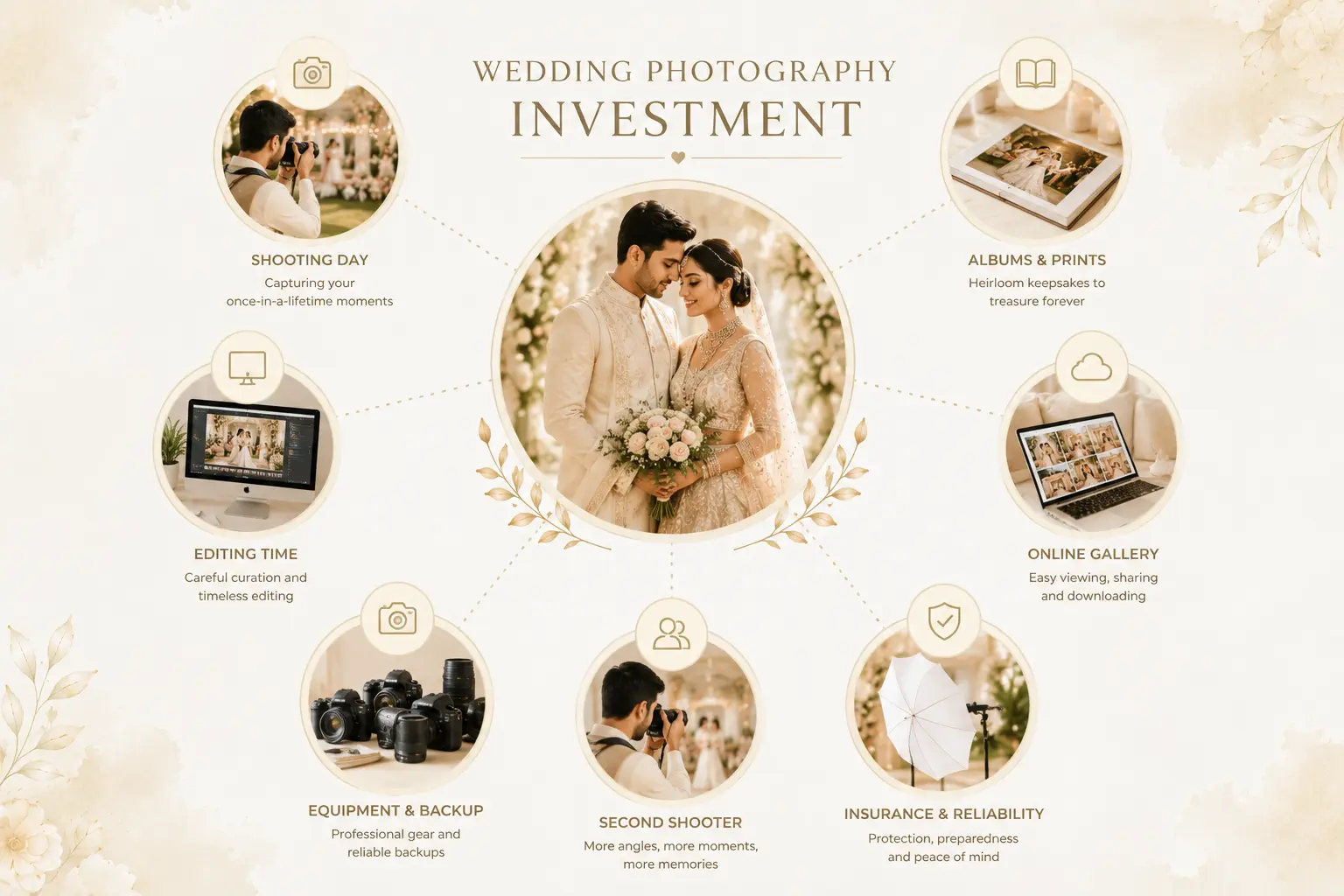
Wedding photography prices can feel all over the place. You'll find photographers at very different price points and it's hard to understand why. Here's the simple answer: you are not paying for one day of someone's time. You are paying for years of practice, professional equipment (and backup equipment, because cameras do fail), editing work that often takes three to five times longer than the actual shooting, and the reliability that comes with running a real business.
Your photography budget is personal and I am not here to judge what you can or cannot spend. What I do think matters is making sure you understand what you are comparing when you look at different packages.
When you are reviewing what is included, ask these questions:
Is a second shooter included? A second shooter is not an extra add-on. At most weddings, they are the person capturing the groom's face when the doors open while the main photographer is at the altar. Without one, a single photographer has to choose where to stand, and some moments will be missed.
How many hours of coverage? Most weddings need at least 8 to 10 hours to cover getting ready through the first dances and cake cutting. Think honestly about your wedding day timeline. A photographer who leaves at 9pm when your reception goes until midnight will leave a gap you will notice later.
What are the digital rights? You should get full rights to print, share, and use your photos however you like. If the contract says otherwise, ask about it before you sign.
How will the photos be delivered? Will you get a USB drive, an online gallery, or both? Is a printed album included? If so, what does it look like?
One way to think about the cost that actually helps: instead of thinking about it as the price for one day, think about what it works out to per year over a long marriage. That changes the number quite a bit, and it is a more honest way to look at what you are getting.
Conclusion: Trust the Process (and Your Gut)
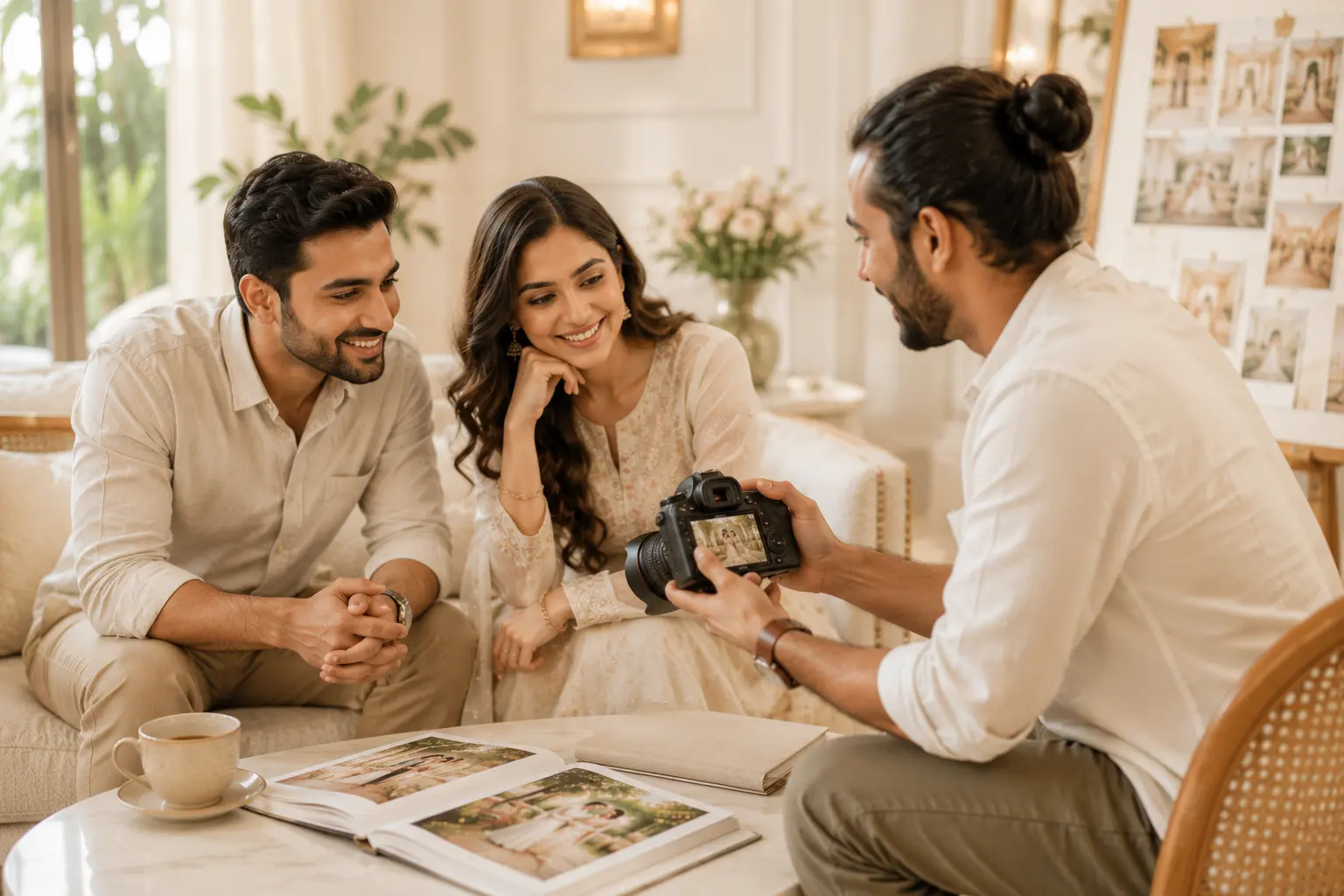
Here is what I have seen after years of watching couples go through this: the people who feel most happy with their photos are almost never the ones who found the cheapest deal or the biggest name. They are the ones who took their time, asked the right questions, and then trusted how they felt.
If you have figured out which wedding photography styles speak to you, looked through full galleries carefully, had a real conversation with your top choices, and done an engagement session to see if the connection is there, you are not guessing anymore. You are making a clear, confident choice.
The photos from your wedding day will be the longest-lasting thing you bring home from it. Choose the right wedding photographer for your day. Not your aunt's idea of what looks nice, not whatever is trending on Pinterest, but the person who sees you clearly and knows how to show that to the world.
You have got this.
Frequently Asked Questions
How far in advance should we book our wedding photographer?
For popular dates, aim to book 12 to 18 months ahead. Good photographers fill up fast, especially on spring and fall Saturdays. If your wedding is six months away, start reaching out to several photographers at once rather than going one at a time.
What happens if our photographer gets sick on the wedding day?
Ask this before signing any contract. A good photographer should have a backup plan, usually a trusted colleague who can step in. Ask what that plan looks like and whether you will have a say in the replacement. Get it in writing.
Do we really need a second shooter?
For most weddings, yes. When the bride walks in, someone needs to capture the groom's reaction while the main photographer is positioned at the altar. A second shooter covers moments that one person simply cannot be in two places to catch.
How long does it typically take to get our wedding photos back?
Most photographers deliver within 6 to 8 weeks. Editing a full wedding gallery takes a lot of time. If someone promises delivery in under two weeks, ask how, as it could mean rushed editing or less careful work.
Should we provide a specific shot list for the day?
Yes, for family group photos. Give your photographer a clear list of every group you want, with names. For the rest of the day, let them work freely. A long shot list for candid moments can actually get in the way of the natural, real photos you hired them to take.
Planning Your Wedding? Let's capture your story beautifully.
Comments (0)
- No comments yet — be the first.